Why Face Yoga Feels Different Once the Heating Comes On
Quick Answer: Once heating comes on, indoor humidity often drops from around 50 percent to under 30, and drier skin has more surface friction and less glide. The same face yoga movement that slid smoothly in summer now drags, which pulls at the skin rather than moving the tissue underneath — the opposite of what most of the movements are for. The fix is more slip, not less pressure: add a facial oil or balm, and reduce the number of repetitions rather than the effort.
The routine has not changed. Same order, same five minutes, same amount of pressure you have used since spring.
But the movements catch now. Your fingers do not travel as smoothly across your cheek, there is more redness afterwards than there used to be, and the whole thing feels like more work for less result.
That is a humidity problem, and it has a straightforward answer.

What does indoor heating actually do to facial skin?
It removes water from the air, and the air takes it from you.
Heating a room without adding moisture drops the relative humidity substantially. A home at 50 percent relative humidity in September can sit under 30 percent within a week of the heating going on, and under 25 in a well-heated flat.
Skin responds to this in two ways that matter here.
The stratum corneum — the outermost layer — loses water to the air. As it dries it becomes less pliable and its surface becomes microscopically rougher. That roughness is what you feel as drag.
The lipid layer thins. The skin’s own surface oils are what normally give it slip. Drier conditions, plus hotter showers, plus the cleansers people switch to in autumn, all reduce that layer. Less oil means more friction.
The combined effect is that the coefficient of friction between your fingertip and your face rises measurably between summer and mid-autumn. The same movement with the same pressure now produces more tissue drag and more shear at the surface.
That matters because most face yoga movements are designed to work on the muscle and fascia underneath, using the skin as something you glide across. When the glide disappears, the force lands on the skin instead of passing through it — and skin does not want to be stretched repeatedly.
What should change in the routine?
Four adjustments, in order of importance.
1. Add slip, and add more than you think. This is the whole fix, and everything else is secondary. A few drops of facial oil, a balm, or a rich moisturiser applied before you start. In summer many people work on clean dry skin and it is fine; in a heated room it is not. If your fingers are not gliding, there is not enough product on your face.
2. Reduce repetitions before you reduce pressure. A common instinct is to press more lightly, which usually means the movement no longer reaches the tissue you were targeting and you just do more of them. Better to keep the depth and cut the reps by around a third through the driest months. Cumulative surface friction is what causes the irritation, and reps are what accumulate it.
3. Move the routine to after a shower or after cleansing, while the skin is still slightly damp and the bathroom air is humid. This is free and it makes a noticeable difference to how the movements feel.
4. Warm your hands. Cold fingertips on cool skin increase drag and make the whole routine less comfortable. Thirty seconds of rubbing your hands together beforehand is enough.
What you should not do is stop, or switch to a completely different routine. The movements are fine. The surface conditions changed.
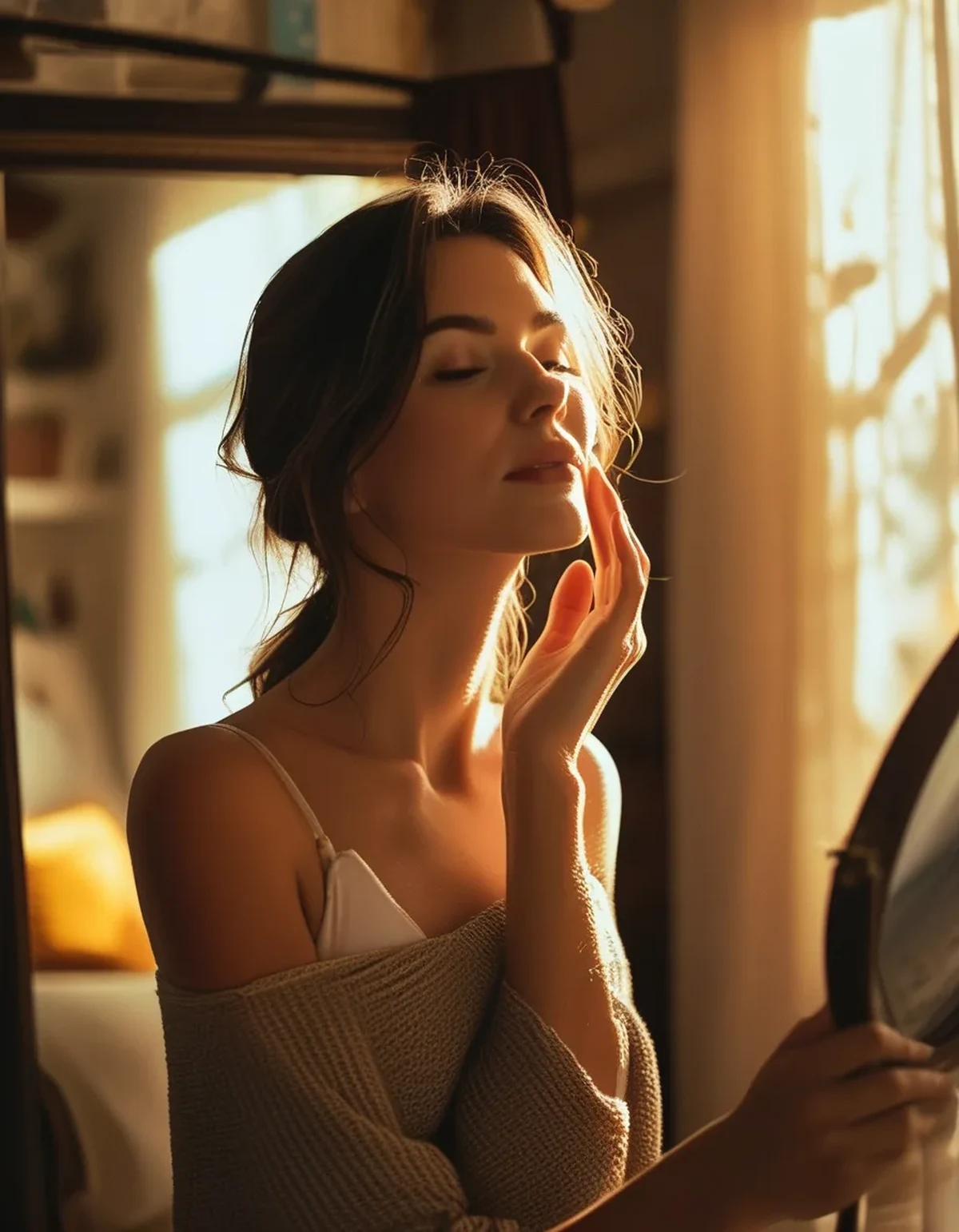
Why does redness last longer in autumn?
Because two things extend it — a compromised barrier and a slower flush response.
The barrier is thinner in dry conditions, so the same mechanical stimulus produces more of an inflammatory response. Redness that faded in five minutes in July may take twenty in November.
Vasomotor response changes with ambient temperature. Moving from a cold outdoor environment into a heated room already produces flushing in many people, and a facial routine on top of that stacks with it rather than replacing it.
There is also a timing factor that is easy to fix. If you do face yoga immediately before going outside into cold air, the flush is prolonged and the barrier is stressed twice. Moving the routine to the evening solves this for most people.
When to actually be concerned. Redness that persists more than about thirty minutes, appears as distinct patches rather than a general flush, is accompanied by stinging or burning, or does not settle overnight is not normal post-routine flush. Persistent facial redness can have causes including rosacea that are worth having looked at rather than worked through. This is general information, not medical advice — if it is not settling, see a professional.
What Nobody Tells You About Face Yoga in Winter Months
Consistency matters more than intensity, and autumn is when people accidentally invert that. Frustrated by the drag, they press harder, get more irritation, and then take a week off. Three light sessions a week beat one hard one followed by recovery.
The neck dries out faster than the face and gets less product. It has fewer oil glands to begin with, and almost everybody stops applying moisturiser at the jawline. If any part of your routine drags most, it will be here.
Hot showers make it worse, not better. They feel like they hydrate and they strip the lipid layer more than anything else in a normal day. Lukewarm, shorter, and moisturise within three minutes of getting out while the skin is still damp.
A humidifier does more for how the routine feels than any product does. Bedroom, overnight, targeting 40 to 50 percent. It works on the cause rather than the symptom, and people who add one usually stop noticing the seasonal difference entirely.
Results plateau in autumn for most people, and that is expected. Facial tissue responds to consistent stimulus over months, and the reduced volume through the driest period shows up as a flat patch rather than a decline. It resumes in spring. Do not read it as the routine failing.
Drinking more water helps less than people hope. Skin surface hydration is governed far more by the barrier and the ambient air than by fluid intake, assuming you are not actually dehydrated. The humidifier and the oil are doing the real work.
FAQ: Autumn Face Yoga Questions, Answered
What oil should I use if my skin is oily to begin with?
Slip and oiliness are not the same problem. A light, non-comedogenic oil such as squalane gives glide without heaviness and sits well under most routines. A gel moisturiser can also work if it stays wet for the length of the routine — the test is simply whether your fingers are still gliding at the end.
Should I do face yoga on completely clean skin or over skincare?
Over something, in dry conditions. The clean-skin approach is a summer instruction and it assumes your own surface oils are providing the slip. In a heated room they are not, so working over a balm or oil is both more comfortable and more effective.
How long before the routine feels normal again?
If the change is purely humidity, adding slip fixes it in one session. If the barrier is already compromised — flaking, tightness, stinging with product — give it a week of gentler cleansing and consistent moisturising before resuming full volume, because working on a damaged barrier prolongs the damage.
TL;DR:
- Heating drops indoor humidity from around 50 percent to under 30, which raises the friction between your fingers and your skin.
- The result is drag, shear on the surface, and more redness — the movements stop reaching the tissue underneath.
- Add slip first: facial oil or balm, applied generously. This is the whole fix.
- Cut reps by about a third rather than reducing pressure, and move the routine to after a shower or into the evening.
- A bedroom humidifier at 40–50 percent does more than any product, and expect a seasonal plateau in results rather than a decline.
Nothing is wrong with the routine. The surface it runs on changed, and it needs a little more lubrication to work the way it did in July.
Keep Reading
This article is for general informational and styling purposes only. Fit, sizing, and product availability may vary.