Face Yoga When the Heating Comes On and Your Skin Changes
Quick Answer: Dry indoor air reduces the water content of the outermost skin layer, which increases friction and makes the same pressure feel harsher. Fix it by adding slip - a facial oil or a richer balm rather than a light gel - reducing pressure by about a third, and shifting your routine to after a shower when skin is still hydrated. Do not push through tugging; drag is what causes the redness and irritation people mistake for progress.
Every autumn, people conclude that face yoga has stopped working or started irritating their skin. Almost always, the routine is unchanged and the environment is not.

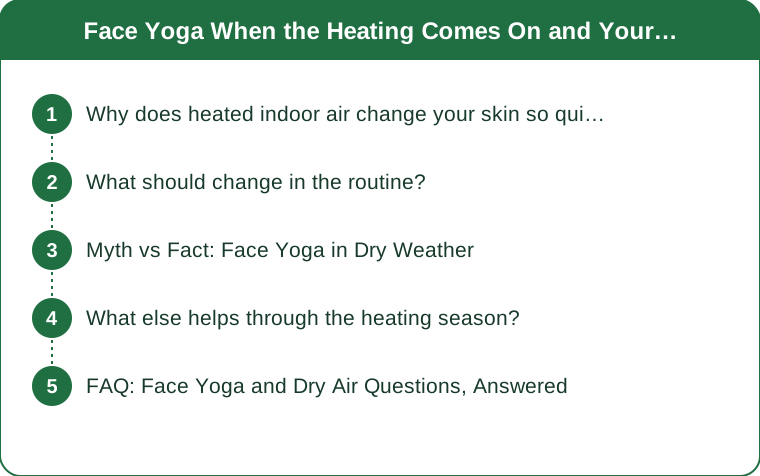
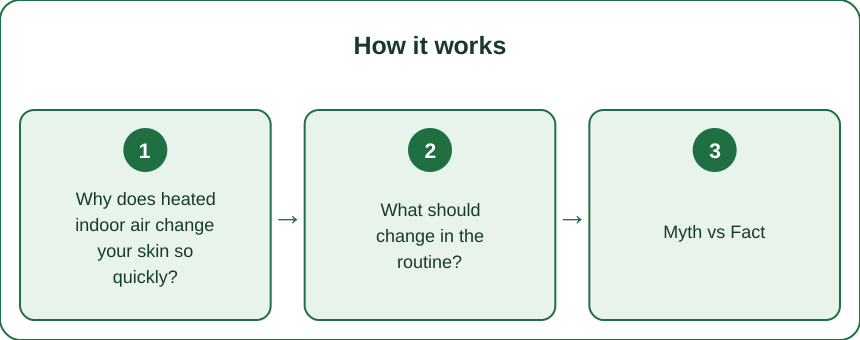
Why does heated indoor air change your skin so quickly?
Heating dramatically lowers indoor humidity. Warm air holds more moisture, so heating cold outdoor air without adding water reduces relative humidity substantially - often into ranges where skin loses water faster than it replaces it.
The outermost layer is the one that changes. The stratum corneum relies on water content to stay flexible. When that drops, it stiffens, and a stiff surface has more friction against a fingertip than a supple one.
More friction means more drag at the same pressure. You have not started pressing harder. The surface has changed, so the same movement pulls rather than glides.
Drag is the mechanism behind most of the complaints. Redness, a stinging sensation afterwards, small marks that take longer to fade, and a feeling of tightness that was not there in summer.
It also happens faster than people expect. The change can be noticeable within a few days of the heating coming on, which is why it seems to arrive suddenly rather than gradually.
What should change in the routine?
Add slip before you change anything else. A facial oil, a balm, or a richer cream gives your fingers something to move on. Gel and water-based serums evaporate quickly and leave you working on a dry surface partway through.
Reduce pressure by roughly a third. With more friction, the same finger pressure transmits more shear to the skin. Lighter is not less effective here - it is the correction that keeps the effect the same.
Move the session to after a shower or bath. Skin is at its most hydrated in the minutes after washing, and applying product then locks some of that in. This one change solves more of the problem than any product does.
Shorten and repeat rather than lengthening. Two shorter sessions are gentler on a compromised barrier than one long one, and consistency matters more than duration in any case.
Watch the areas that are thinnest. Around the eyes and along the jaw are where drag causes the most irritation, and where the lightest touch belongs regardless of season.

Myth vs Fact: Face Yoga in Dry Weather
Myth: If it tugs, you are doing it properly. Fact: Tugging is the specific thing to avoid. Shear stress on skin is not a training stimulus for facial muscles, and repeated drag on a dry barrier causes irritation rather than tone.
Myth: Redness afterwards means increased circulation, which is good. Fact: Mild transient flushing is normal. Redness that lasts, stings, or comes with a rough texture is barrier irritation, and it is a signal to reduce pressure and add slip.
Myth: Drinking more water fixes dry indoor skin. Fact: Hydration matters for overall health, but the water content of the outer skin layer is governed far more by the humidity around it and by what you apply on top. A humidifier and an occlusive moisturiser do more for this specific problem than an extra litre.
Myth: You should skip face yoga entirely in winter. Fact: No reason to. Adjust slip, pressure, and timing and the routine works fine. Skipping three months and restarting is worse for consistency than adapting.
Myth: Facial oils clog pores and cause breakouts. Fact: It depends entirely on the oil and the person. Many lightweight facial oils are well tolerated by skin that breaks out, and heated indoor air commonly makes skin both drier and more reactive at once. Patch test rather than ruling the category out.
What else helps through the heating season?
A humidifier in the room where you sleep. Eight hours in low humidity is the largest single exposure, and improving it helps skin, sinuses, and sleep together.
Turn the shower temperature down. Very hot water strips lipids from the barrier and undoes the hydration you were trying to gain. Warm rather than hot, and moisturise within a few minutes of getting out.
Add an occlusive step at night. A balm or richer cream over your usual routine reduces overnight water loss, and overnight is when most of it happens in a heated bedroom.
Sit away from the direct source. A desk beside a radiator or in the path of a heating vent is a much drier microclimate than the rest of the room, and the effect on skin is noticeable.
Reconsider active ingredients temporarily. Retinoids and acids are more likely to cause irritation on a compromised barrier. Reducing frequency for a couple of weeks while your skin adjusts to the season is a reasonable adjustment, and worth discussing with a dermatologist if you use prescription products. This is general information, not medical advice.
And if skin is cracked, actively stinging, or persistently inflamed, pause the manual work entirely. Massage on a broken barrier is not the moment for consistency, and this is when to see a professional rather than to adjust technique.
FAQ: Face Yoga and Dry Air Questions, Answered
Why does the same routine leave marks now when it did not in summer?
More friction, less flexible surface. The marks are pressure and drag lines on skin that has less water in the outer layer, and they take longer to fade because the skin is less supple. Adding slip and reducing pressure usually removes the problem within a few days.
Should I use a tool instead of my hands?
Tools like gua sha stones need even more slip than fingers do, so in dry conditions they can make drag worse rather than better if used with insufficient product. If you like them, use a generous layer of oil and keep the pressure light. Fingers give you more feedback about how much drag you are creating.
How long until my skin adjusts to the heating?
Skin adapts somewhat over a couple of weeks, but the environment does not change, so some adjustment to your routine needs to be permanent for the season. Expect the first two weeks after the heating comes on to be the worst, then a new normal that still needs more slip than summer did.
TL;DR:
- Heated indoor air lowers humidity, which stiffens the outer skin layer and increases friction at the same pressure.
- Add slip first - an oil or balm, not a gel - then reduce pressure by about a third.
- Move the session to just after a shower, when skin is most hydrated.
- Tugging is not effort, it is shear. Persistent redness means back off, not push on.
- A bedroom humidifier, cooler showers, and a night-time occlusive help more than any technique change.
The routine did not stop working. The air changed.
Keep Reading
This article is for general informational and styling purposes only. Fit, sizing, and product availability may vary.