Does Your Sleep Position Actually Undo Your Face Yoga Progress?
Quick Answer: Consistent side or stomach sleeping does create repeated mechanical compression on the same areas of the face night after night, and dermatology research links this specifically to sleep lines and asymmetric wrinkle patterns — but it’s a separate mechanism from what face yoga targets, so one doesn’t directly cancel the other out.
They’re both real factors, just working on different parts of the same picture.

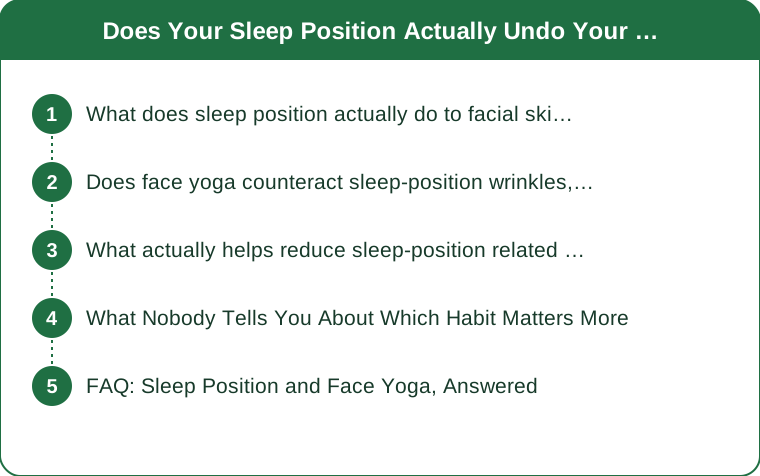
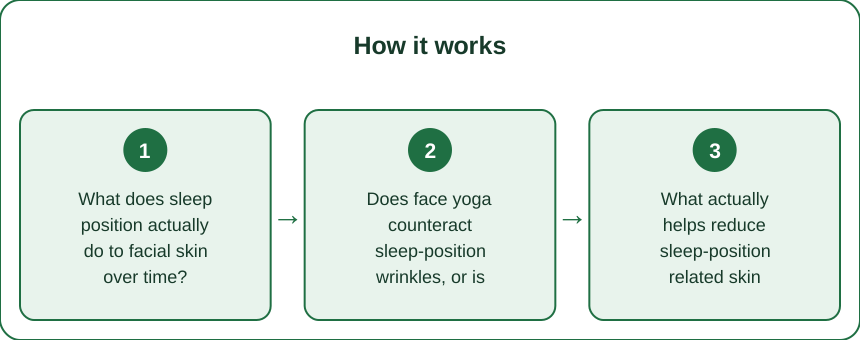
What does sleep position actually do to facial skin over time?
Repeated, sustained pressure against a pillow in the same position every night creates mechanical folding of skin in predictable spots, and dermatologists have documented that side sleepers tend to develop more pronounced lines on the cheek and around the mouth on their dominant sleep side specifically.
This is a slow, cumulative effect from years of repetition, not something that happens noticeably after a single night, which is why it’s easy to overlook as a contributing factor.
Does face yoga counteract sleep-position wrinkles, or is it a different mechanism entirely?
Face yoga primarily targets muscle tone and circulation through active movement, while sleep-position lines come from passive, repeated mechanical compression — these are different enough mechanisms that face yoga isn’t expected to directly reverse sleep-related creasing, even if it’s genuinely improving muscle tone elsewhere.
Think of them as two separate inputs to overall facial skin appearance rather than one canceling out the other; addressing sleep position and doing face yoga are complementary strategies, not competing ones.

What actually helps reduce sleep-position related skin creasing?
Switching to back sleeping removes direct facial pressure entirely, which is the most effective fix according to dermatology guidance, though it’s a genuinely hard habit to change for people who’ve slept on their side their whole life.
A silk or satin pillowcase is a smaller but real improvement — it reduces friction and skin drag compared to cotton, which lessens (though doesn’t eliminate) the mechanical folding that happens as you shift positions through the night.
What Nobody Tells You About Which Habit Matters More
For most people, the cumulative effect of decades of sleep position likely has a larger visible impact on specific localized lines than a few months of face yoga will have on overall muscle tone — this isn’t a reason to skip face yoga, but it does set realistic expectations for what it can and can’t address.
The most realistic combined approach treats face yoga as a muscle-tone and circulation habit, and separately addresses sleep position and pillowcase material as its own habit, rather than expecting one practice to solve for both mechanisms.
FAQ: Sleep Position and Face Yoga, Answered
Can I realistically train myself to switch from side to back sleeping?
It’s difficult but possible for some people — using pillows to physically block rolling onto your side is the most commonly recommended method, though many people find it doesn’t fully stick without ongoing effort.
Does a silk pillowcase actually make a measurable difference on its own?
It reduces friction and skin drag, which is a real, modest benefit, but it doesn’t eliminate the mechanical compression from sleep position itself the way switching to back sleeping would.
Is it too late to address sleep-position wrinkles once they’ve formed?
Established deep lines are unlikely to fully reverse just from changing sleep habits, but preventing further progression is still a meaningful benefit, and combining it with consistent face yoga and general skincare addresses the fuller picture going forward.
TL;DR:
- Sleep position creates real, cumulative mechanical creasing distinct from what face yoga targets
- Face yoga works on muscle tone and circulation, not the compression mechanism behind sleep lines
- Back sleeping removes direct pressure entirely; a silk pillowcase helps but doesn’t eliminate the effect
- Treat sleep position and face yoga as two separate, complementary habits, not one solving for the other
Keep Reading
This article is for general informational and styling purposes only. Fit, sizing, and product availability may vary.