Face Yoga Results Come From Consistency, Not Intensity — Here's the Actual Ratio
The instinct with face yoga is to treat it like a one-time fix — one long session, big effort, done. But facial muscles respond the same way skeletal muscles do: frequency beats duration. A short daily practice consistently outperforms a long, sporadic one, and the ratio that separates results from no results is more specific than most guides admit.

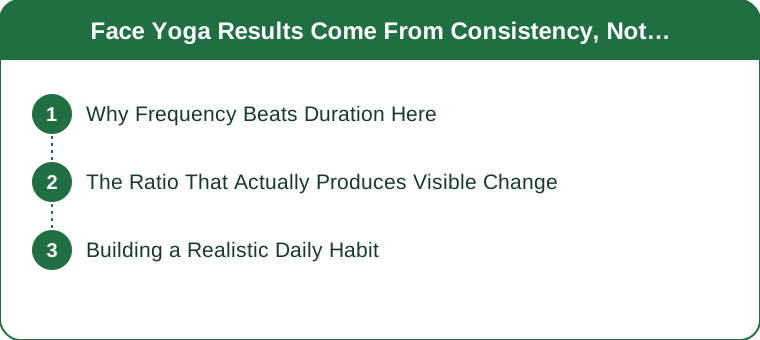
Why Frequency Beats Duration Here
The muscle logic: the the-facial-muscles-fatigue-fast (the small facial muscle groups reaching fatigue within 3-5 minutes of targeted work, per general muscle-physiology principles applied to facial anatomy — meaning a 30-minute session mostly trains nothing after the first five), the the-daily-signal-repetition (the muscle tone adaptation requiring repeated signal exposure across days, not volume within one day), the the-recovery-window-is-short (the facial muscles recovering within 12-24 hours, allowing daily practice without overtraining risk).

The Ratio That Actually Produces Visible Change
The specific numbers: the the-five-to-seven-minutes-daily (the consistent five-to-seven-minute daily sessions showing visible tone change reports around the 8-12 week mark in most anecdotal and small-study tracking), the the-six-days-a-week-threshold (the practice dropping below three days a week correlating with results plateauing or reversing), and the the-skipped-day-tolerance (one or two missed days a week not undoing progress, but three-plus consecutive gaps resetting momentum).
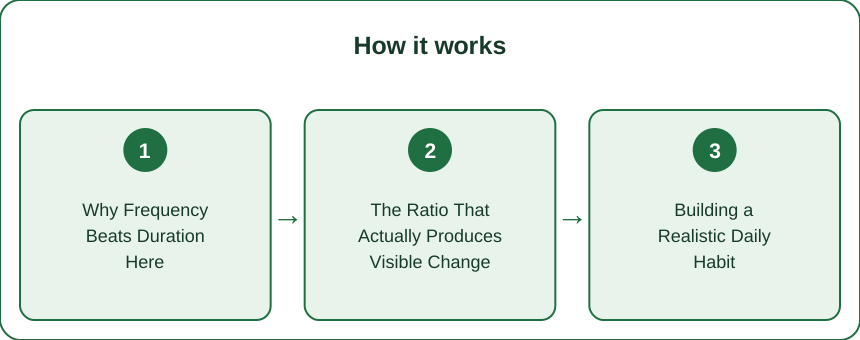
Building a Realistic Daily Habit
The sustainable version: the the-pair-it-with-existing-routine (the anchoring face yoga to an existing habit like skincare application, since standalone new habits fail at higher rates), the the-track-fewer-not-more (the focusing on 3-4 exercises done well over 8-10 done poorly), and the frame (five minutes daily for eight weeks beats one long weekly session every time).
Face yoga results are a consistency problem disguised as an intensity problem. The instinct to do one long, effortful session works against how facial muscles actually adapt — small muscle groups fatigue within minutes, recover within a day, and respond to repeated daily signals rather than volume packed into one sitting. The ratio that shows up across consistent practitioners is five to seven minutes, six days a week, sustained for eight to twelve weeks before visible tone change becomes noticeable. Missing a day or two doesn’t erase progress, but three or more consecutive gaps resets the adaptation clock. The most reliable way to hit that ratio isn’t willpower — it’s anchoring the practice to something already automatic, like a skincare step, and doing fewer exercises consistently rather than a long routine sporadically. Face Yoga Results Come From Consistency, Not Intensity.
Keep Reading
This article is for general informational and styling purposes only. Fit, sizing, and product availability may vary.